
P-167: Paranoia: Update 18: Oculus Rift Port/Integration
I have successfully ported this project to my Open VR and DirectX build of the engine. The port was quite easy, since I made few C++ changes, so I just needed to copy over my scripts and art.
I have noticed some issues with the Virtual reality side of the project however.
The main one is that the controls are very choppy. This problem only occurs after the procedural level has been created, the default empty level works fine. I suspect that what is happening is that the creation of the procedural level, being computationally intensive, briefly blocks the controls from responding. When the level is finished building, the controls (gamepad and head tracking) don’t reinitialise properly, and there are synchronisation problems. I will need to dig deeper into this to fix it.
Another issue that I ran into is the scaling of items in the world. I find that with most first person games a “realistic” scale on paper actually looks very cramped and claustrophobic on a computer monitor, and it is actually necessary to scale up the world and the world objects to make the scale feel right. This is what I did in this project, however, when playing the game with the Oculus Rift, I noticed that the scale seemed off. This is likely due to the rift providing a true “first person” viewpoint. I will likely need to scale the word objects and world size to fix this. Scaling the world objects is not a problem, but scaling down the walls and floors could cause problems , since all of the walls are created individually and fit together according to an offset.
I have also noticed that art quality matters a lot more in virtual reality than on a computer monitor. I have not finalised the textures for this project yet, most of them dont have normal maps, and I am running the game in a low resolution windowed mode, however, I do notice the lack of detail a lot more in VR than I do on a screen.
Some rooms also feel quite empty, due to a lack of interior objects. This is caused by the random object creator.
There are also a few issues with the Dx 11 build which I am still working to solve.
I am confident that I can fix most of these issues, and overall, the port went much faster and smoother than I thought, it was more or less complete in two days, and I can now being configuring the game and it’s controls for VR.
The immersion in the game is, of course, much stronger in VR. I am currently using very bright lighting to make finding and fixing bugs easier, but once I create a proper night-time scene, with some rain, lightning, and some atmospheric sound effects, I think it will really start to “feel” like a game.
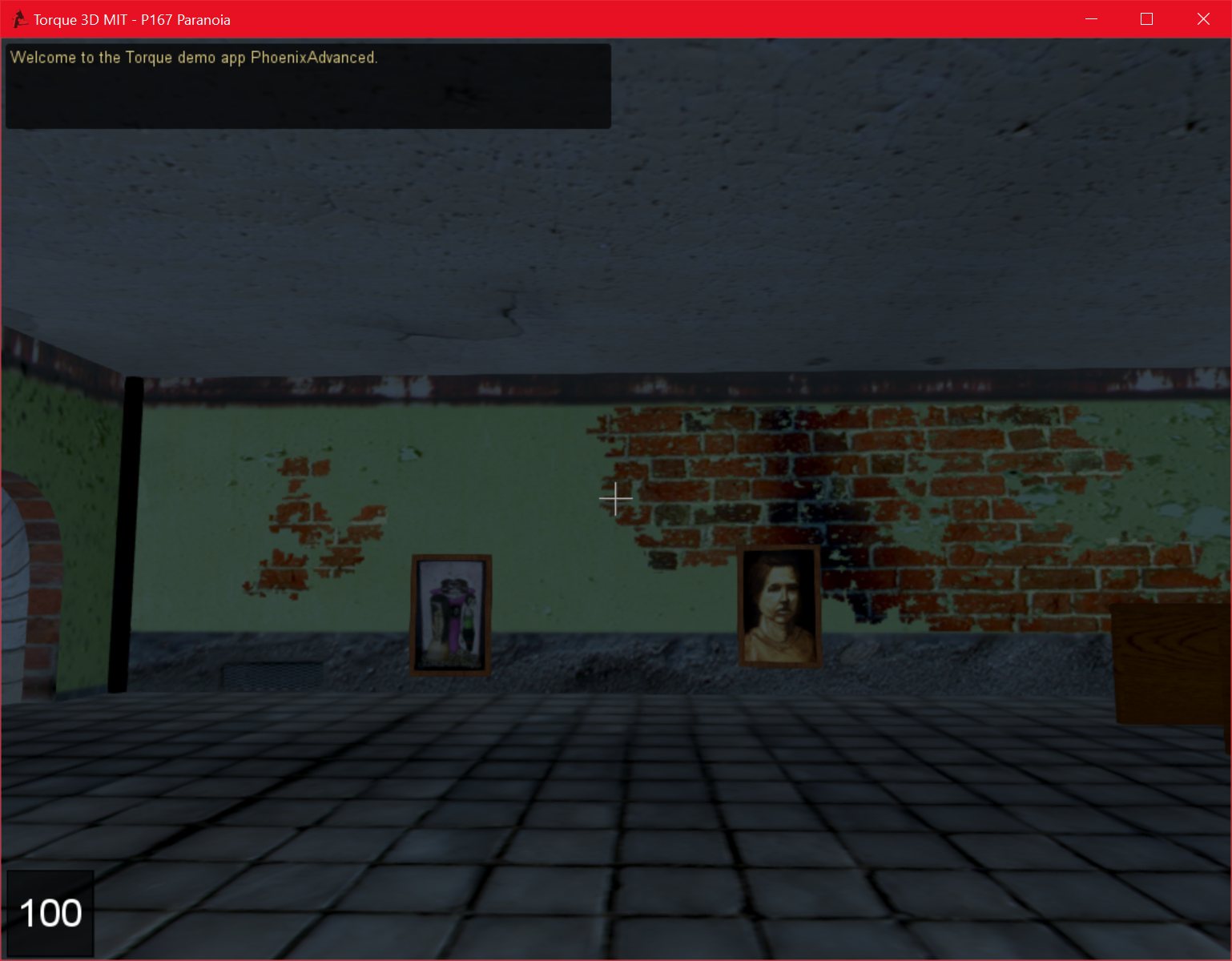
05/07/2016 , 10:23:13 PM
Torque 3D MIT – P167 Paranoia
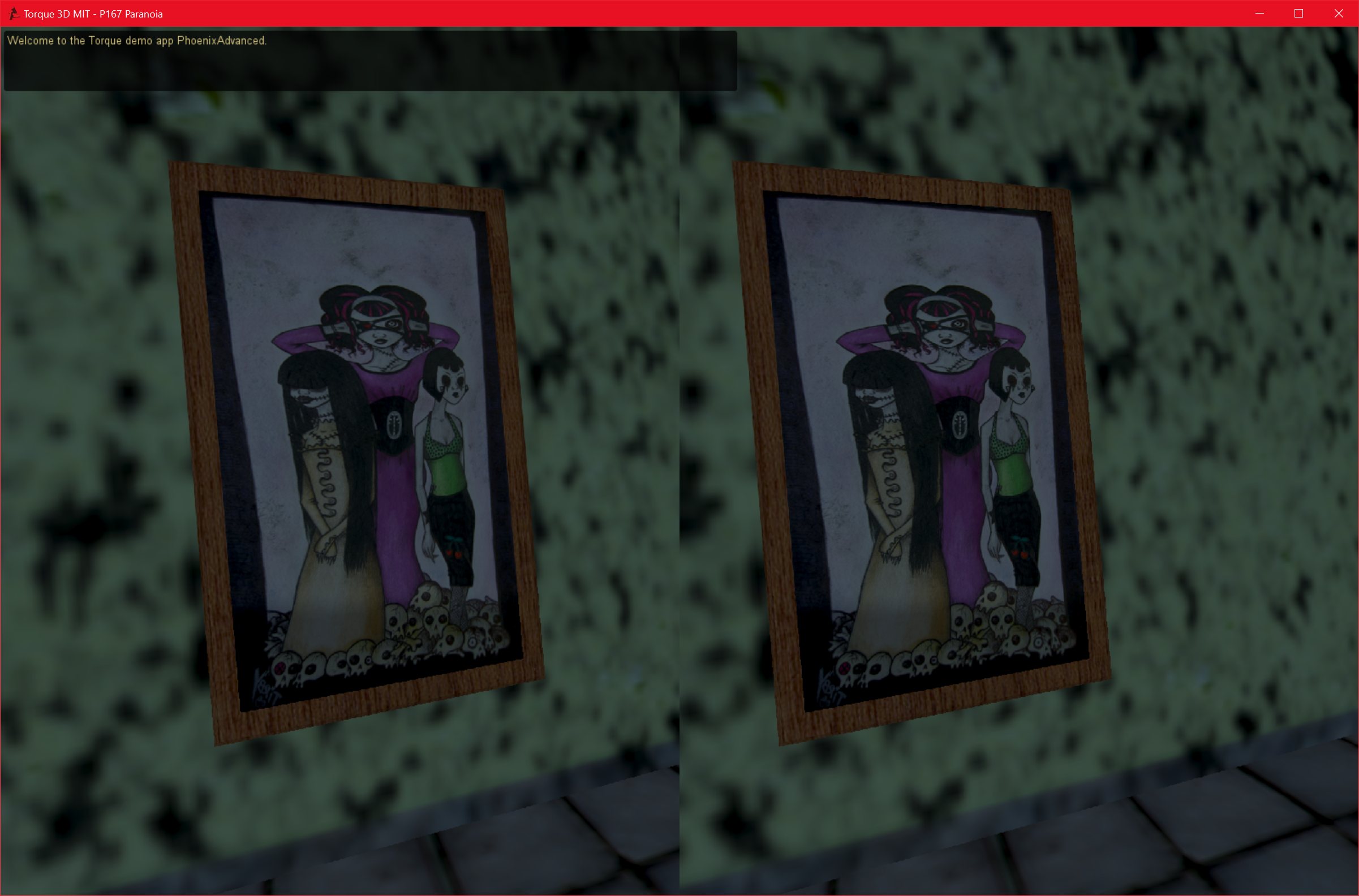
06/07/2016 , 08:16:21 PM
Torque 3D MIT – P167 Paranoia
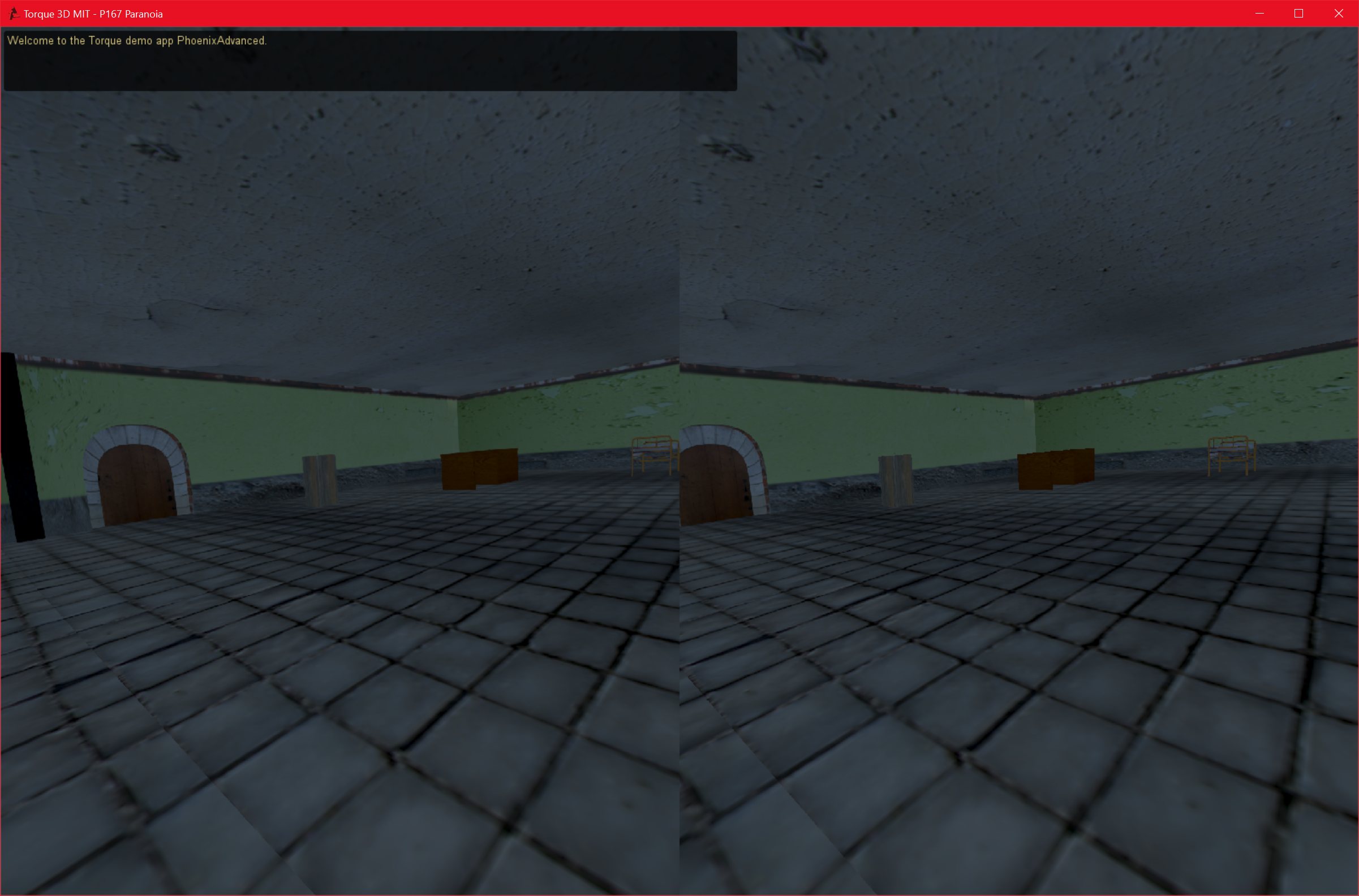
06/07/2016 , 07:38:01 PM
Torque 3D MIT – P167 Paranoia
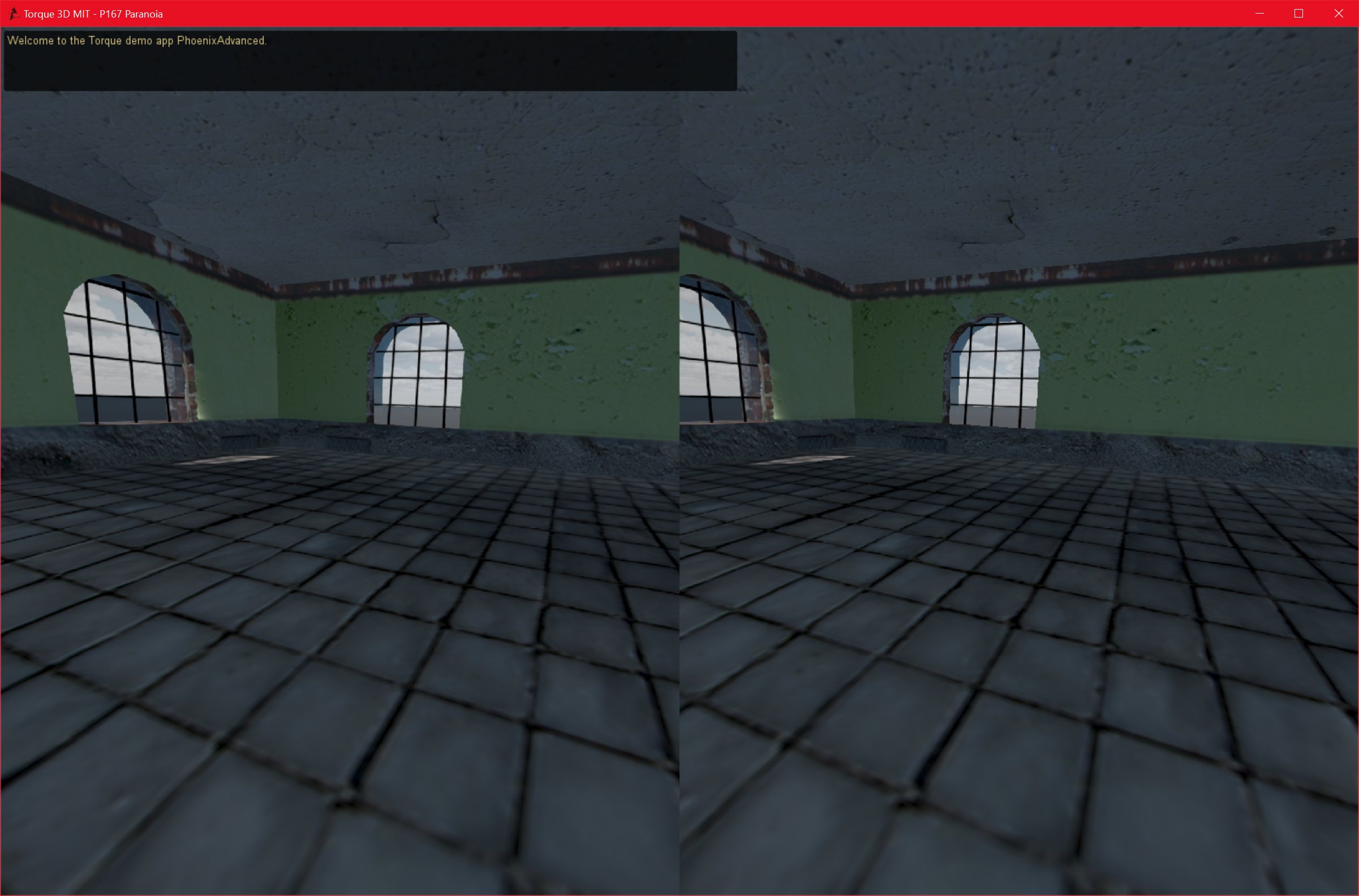
06/07/2016 , 07:37:54 PM
Torque 3D MIT – P167 Paranoia
![Spiritus Astrum [P0-B14]: p1557: Towards Early Access](https://i.imgur.com/XZnoVge.jpeg "Spiritus Astrum [P0-B14]: p1557: Towards Early Access")
![Spiritus Astrum [P0-B14]: p1556: Towards Early Access](https://i.imgur.com/T5K2dqM.jpeg "Spiritus Astrum [P0-B14]: p1556: Towards Early Access")
![Spiritus Astrum [P0-B14]: p1555: Towards Early Access](https://i.imgur.com/ViBetHM.jpeg "Spiritus Astrum [P0-B14]: p1555: Towards Early Access")